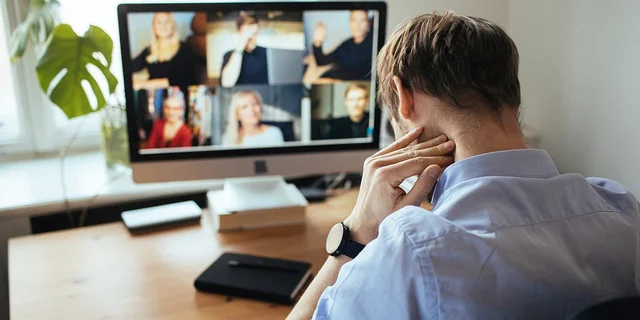
The Hidden Cost of Always On Video Fatigue Meetings (and the One Toggle That Saved My Brain)
Josh Shear – I didn’t notice it at first. The camera light was always on, the grid of faces always there, the agenda always sliding past. By late afternoons I felt strangely depleted, like I’d been performing on a stage nobody paid tickets for. It took one tiny interface change to realize what was really happening: a build-up of attentional taxes that I’d been paying in the background. That’s when I started naming the problem for what it is—always on video fatigue—and hunting for the smallest lever with the biggest payoff.
Here’s the short version and the lead into everything that follows. The hidden cost wasn’t only bandwidth or subscription fees. It was micro-anxiety from monitoring my own face, the perpetual urge to “perform” connection, and the cognitive switching between speaking, watching, and policing distractions. That pattern is textbook always on video fatigue, the kind of slow burn that sneaks into your calendar and your sleep. It’s also the kind of friction that compounds: more meetings, more self-monitoring, more correction. When I flipped one setting—hiding my self-view by default—the difference was immediate. Self-consciousness fell, attention rose, and the cycle of always on video fatigue finally got a choke point. On tough weeks, I double down: audio-first when possible, then video as a conscious choice, and the edge comes off that same always on video fatigue every time.
The human brain didn’t evolve to watch a mirror of itself while negotiating priorities. Self-view turns every check-in into a subtle performance review. You’re looking at you, they’re looking at you, and you’re also looking at them looking at you. That recursive loop adds a measurable cognitive toll even when nobody says a word. Multiply that by a dozen calls, and you’ve manufactured a full day of low-grade stage fright.
The simplest fix was the one I’d ignored: hide self-view. Not turning the camera off for others—just removing my own video tile from my screen. The social connection remains; the hyper-vigilance vanishes. Facial feedback from others still guides tone and pacing, but the internal critic gets fewer chances to jump in. In practice, it feels like the difference between presenting in a mirrored room and talking across a table.
After I hid self-view, I noticed several second-order effects. I spoke more naturally because I wasn’t subconsciously choreographing expressions. My notes improved because I looked at documents, not my own micro-reactions. I felt less tired at 5 p.m., and I recovered faster between calls. The knock-on benefit: I could bring video energy to calls that truly needed it—clients, creative reviews, conflict resolution—without carrying the residue into the next block.
always on video fatigue also shrank for teammates who tried the same toggle. Some reported fewer “camera panic” moments; others said the urge to fix hair or lighting every five minutes just evaporated. One change, broad relief.
There are exceptions. If you’re testing a demo with screen overlays, accessibility captions, or virtual backgrounds that can misbehave, a temporary self-view check prevents surprises. If you’re coaching on presentation skills, instruments matter: posture, lighting, framing. Use self-view as a tool, not a default. The key is intentionality—return to hidden mode when the diagnostic moment passes.
Read More : Exploring Latest Trends in Digital Technology
Think of a meeting in layers. The outer layer is logistics: invite, link, timebox. The middle layer is social: norms, turn-taking, cameras-on expectations. The inner layer is attention: how focus is allocated minute by minute. Hide self-view alters the inner layer first—less self-scrutiny, more listening. Pair it with agenda side-notes, a quick round of “silent first” comments in chat, and a timed summary. The stack reduces friction without adding new tools.
Decide the minimum viable modality. If the goal is an update, start audio-first and switch to video only for decisions or diagrams. If you need rich nonverbal cues, start with video but announce that self-view off is fair game. Keep cameras optional for participants who need bandwidth or privacy flexibility. You’ll be surprised how much psychological permission a single sentence gives: “Self-view off is recommended; use video if it helps you focus.”
You don’t need a heart-rate monitor. Track three signals for a week: end-of-day energy (1–10), meeting recall (how many action items you remember without notes), and context switching friction (how long you take to start the next task). In my case, energy rose by late afternoons, recall improved, and the “spin-up” time between sessions shrank. The effect wasn’t mystical; it was simply fewer attention leaks.
Sure—until it isn’t. The point is connection, not compliance. If seeing faces improves empathy or alignment, use it. If it turns every status update into a pageant, you’re paying in attention what you’re saving in travel. The best teams I’ve watched treat video as a scalpel, not a sledgehammer: intentional, bounded, and supported by clear agendas and crisp follow-ups.
Begin by changing your default: hide self-view on all platforms. Adopt audio-first for recurring stand-ups and reserve video for decision or feedback blocks. Timebox status segments to five minutes, then flip screenshare for artifacts rather than faces. Rotate facilitation so one person isn’t carrying the cognitive load every time. End with a two-minute “what we decided” read-out, posted in chat or your doc. None of this requires new software; it requires new defaults.
I didn’t quit video. I stopped letting it run me. One small choice—no mirror during conversations—took the pressure off without taking people out of the room. The payoff is clear calendars, clearer minds, and the kind of working day that leaves enough attention for real life after the last call. Make the change, and give it a week. If your evenings feel lighter, you’ll know you found the toggle, too.
Josh Shear - A sudden surge in cross‑sector commentary emerged this week as a leading political analyst posted a 1,200‑word…
Josh Shear - In the past year, 68% of active political bloggers reported a surge in cross‑partisan comments, according to…
Josh Shear - Political fragmentation and digital acceleration have rewired how culture is produced, consumed, and contested worldwide, with algorithmically…
Josh Shear - The traditional boundaries separating governance, societal norms, and digital innovation have collapsed, creating unprecedented politics culture tech…
Josh Shear - A comprehensive analysis of recent electoral patterns reveals a staggering 65% correlation between high-frequency social media usage…
Josh Shear - A recent comprehensive study by the Reuters Institute for the Study of Journalism indicates that trust in…
This website uses cookies.
